

What is 3D Product Photography? The Complete Guide
3D product photography has long been an essential part of manufacturing, engineering, and industrial marketing. It can be used to showcase machinery, production lines, or technical equipment, high quality visuals help companies communicate their capabilities, solutions and products.
But as digital marketing and B2B buying continue to evolve, so do customer expectations.
Today's buyers want more than just standard photographs. They expect clear, detailed visuals that explain how complex products work, highlight technical features, and present equipment in the best possible way. This is where 3D industrial photography comes in.
In this guide, we'll explain what 3D product photography is, how it works, and why an increasing number of industrial companies are choosing it over traditional photography.
What is 3D industrial photography?
In simple terms, 3D product photography is the process of creating photorealistic, computer generated images of industrial products, machinery, equipment, or production systems. It provides a flexible alternative to traditional industrial photography, which relies on physical equipment, locations, and professional photoshoots.
Instead of photographing an existing product, 3D industrial photography uses CAD models, engineering drawings, technical specifications, or custom 3D modeling to create highly realistic digital representations.
These digital assets can then be virtually "photographed" from any angle, under any lighting conditions, and within virtually any environment, from clean white studio backgrounds to realistic factory floors or construction sites.
The resulting images can be used across websites, brochures, sales presentations, trade show displays, technical documentation, and marketing campaigns.
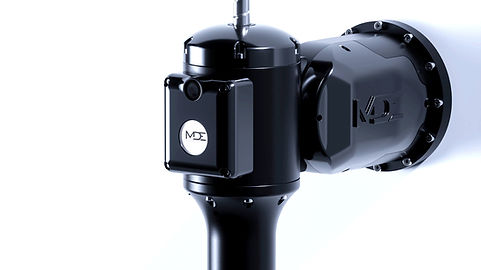

How does 3D industrial photography work?
There are several ways to create photorealistic industrial visuals, depending on the available source material and project requirements.
The most common methods include:
-
CAD Based Rendering - Uses existing CAD models created by engineering teams to generate photorealistic images without needing physical products.
-
3D Modeling - We can also create accurate digital models from technical drawings, measurements, or reference photos when CAD files aren't available.
-
Photogrammetry & 3D Scanning - Captures existing equipment using multiple photographs or laser scanning to create highly accurate digital models.
-
Hybrid Workflow - Combines traditional photography with CGI to enhance products, replace backgrounds, or visualize internal components.
These methods allow manufacturers to create versatile digital assets that can be reused across websites, catalogs, product launches, trade shows, technical documentation, and sales materials.

3D industrial photography vs. traditional industrial photography
Now that we've covered what 3D industrial photography is and how it works, let's compare it to traditional industrial photography.
Traditional industrial photography requires a physical product, a suitable location, and a professional photoshoot. While it's ideal for capturing real facilities and finished products, making changes often means organizing another shoot.
3D industrial photography offers far greater flexibility. Products can be visualized before they're manufactured, camera angles and lighting can be changed at any time, and new product variations can be created without additional photography. It also makes it possible to showcase internal components, cutaway views, and other technical details that are difficult or impossible to capture with a camera.
Traditional photography still has its place, but for technical products and industrial equipment, 3D industrial photography provides a more flexible, scalable, and cost-effective solution.

The key advantages of 3D industrial photography
Manufacturers adopting 3D industrial photography benefit from several significant advantages.
-
Cost Savings
A single 3D model can generate hundreds of marketing images without requiring additional photoshoots, travel, or expensive production setups. -
Show Products Before They're Built
Marketing doesn't have to wait for manufacturing. Companies can begin promoting new products long before the first prototype is completed. -
Unlimited Creative Freedom
Products can be displayed from any angle, with perfect lighting, exploded views, transparent housings, or internal cutaways that traditional photography simply cannot achieve. -
Consistent Visual Quality
Every image maintains the same lighting, materials, camera angles, and branding across product ranges and marketing campaigns. -
Faster Marketing Production
Once a 3D model exists, creating new visuals for brochures, websites, advertisements, or social media becomes significantly faster. -
Cross Department Value
The same 3D assets can support marketing, sales, engineering, training, investor presentations, and technical documentation.
